



Source: German Road Safety Council (Deutscher Verkehrssicherheitsrat e.V.)
Using bicycles, e-scooters or any two-wheel motor vehicle is popular, environmentally friendly and usually, it does not require finding a parking space. Cycling in particular has seen a real boom in recent years, be it with or without electrical assistance.
However, the use of two-wheelers and e-scooters is associated with an increased likelihood of being injured, as, in the case of an accident, the user can only be protected against injuries to a limited extent.
In 2025, a total of 153,002 motorcycle, e-scooter and bicycle users were injured in accidents, 1,031 of which fatally. This means that 41 percent of all casualties and 36 percent of all road fatalities were users of motorcycles, bicycles or e-scooters. In 2025, a total of 481 people were killed in road traffic while riding a motorcycle with a licence plate, 462 were killed while riding a bicycle (of which 214 were riding a pedelec), 55 a motorcycle with an insurance plate and 33 an e-scooter.
The Federal Ministry of Transport (BMV) is supporting and funding initiatives and activities to enhance road safety for riders of two-wheelers, be it bicycles, pedelecs, electric scooters or motorcycles.
Carrying children in cargo bikes
Source: Federal Highway Research Institute (BASt)
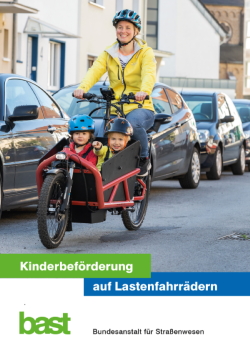
Cycling is trendy. That is why more and more cargo bikes are in use–be it to transport groceries or to carry children. The Federal Highway and Transport Research Institute (BASt) has published a brochure with tips on equipping and handling cargo bikes, from the first test ride to daily use. It also lists useful features to help choose the right cargo bike if it is mainly used for transporting children. The brochure also includes motor skills exercises for handling a cargo bike, which should be completed before using the bike in traffic. The “Carrying children in cargo bikes” brochure can be ordered from BASt or downloaded from their website (German only ).
Learn how to cycle: not a problem with the right exercises and patience

Source: German Accident Prevention Organization (Deutsche Verkehrswacht e.V.)
The free brochures of the German Accident Prevention Organization (Deutsche Verkehrswacht, DVW) illustrate the path towards safe cycling: starting with children being prepared with balance bikes and scooters, to learning the motor skills involved in cycling and the use of bicycles in a protected road environment to adolescents participating in moving traffic. The explanations are brief and compact and can be implemented directly.
The following DVW brochures can be downloaded from this website free of charge (all Brochures in German):
- Riding on wheels for pre-school children,
- Learning how to cycle;
- Learning how to cycle for children aged 7 to 10;
- Learning how to cycle for children aged 10 or older.
Safe cycling programme (“FahrRad, … aber sicher!”)
Source: Deutsche Verkehrswacht e.V.
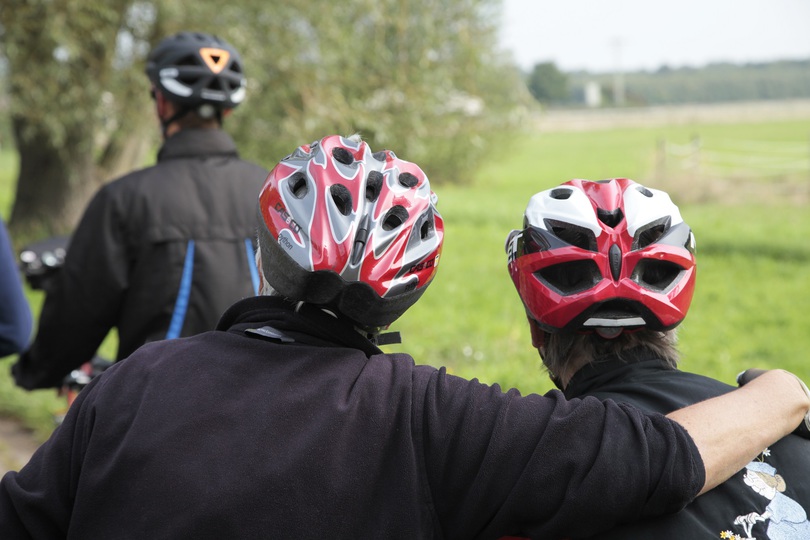
There are many questions relating to all aspects of cycling. Answers to these questions are given at the safe cycling programme days (Verkehrssicherheitstage FahrRad, … aber sicher!) of the DVW. The variety of topics is very diverse, ranging from the recommendation to wear a cycle helmet, useful motor skills exercises for adults and children, a graphic illustration of the dangers of the "blind spot”, safe equipment of bicycles and the issue of drunk cycling. Volunteers of the DVW advise visitors in a sometimes in a playful other times in a serious way. In practical exercises on the pedelec course or the electric scooter course, visitors are encouraged to train their motor skills as well as consider possible consequences of risky behaviour. The events are held at sport cycling events and bicycle fairs as well as at town fairs and cycle rallies. More information on the safe cycling programme (“FahrRad, … aber sicher!”) can be found here (in German).
‘Fit by bike': The training programme for cyclists and pedelec riders.
Pedelecs, are very popular among senior citizens. They are are bicycles assisted by an electric motor and can reach a speed of up to 25 km/h. Unfortunately, the share of fatal accidents involving a bike or pedelec is particularly high. Bicycle training courses can help improve motor skills of senior citizens so they can better handle their bicycles or pedelecs. The one-day training course ‘Fit by bike’ is carried out with qualified support by the DVW. The numerous exercises and practical tips for people riding bicycles or pedelecs are not only fun, but also enable participants to practice how to generally ride their bike safely and in particular in traffic. For more information on the training programme for cyclists and pedelec riders visit https://www.verkehrswacht.de/fit-mit-dem-fahrrad/.
Campaign: Handling the E – Safely riding a pedelec

Source: German Road Safety Council (DVR)
In the last few years, the number of electric bicycles being sold in Germany has been rising. Due to the growing popularity, accident figures have also increased in the last few years.
The German Road Safety Council (DVR) is conducting a nationwide prevention campaign called ‘E im Griff’ (E under control) on the safe use of pedelecs, supported by the Federal Ministry of Transport and the German Statutory Accident Insurance Institution (DGUV).
The campaign draws attention to the specific challenges associated with riding a pedelec with the aim to prevent accidents. Among other things, it points out how pedelecs have different riding characteristics than conventional bicycles, which riders should familiarize themselves with before their first ride. The safe transport of children by cargo bike is also part of the campaign communication, as is raising awareness among car drivers for the safety of pedelec riders through specific calls to action, in an effort to promote respectful and safe coexistence on the roads.
For more information and short videos on prevention visit (German only).
"Turn your head to see cyclists": the dooring campaign

Source: German Road Safety Council (Deutscher Verkehrssicherheitsrat e.V.)
A dooring accident. What does it actually mean? It describes accidents involving a vehicle door that is suddenly opened, causing a cyclist to collide with the door and being injured. In these ‘dooring accidents’, it is too late for the cyclist to brake or swerve to avoid the vehicle. They often suffer serious head or leg injuries. More than one out of ten car drivers (13 percent) rarely or never consider that cyclists could be approaching from behind when they open the door to leave the vehicle. Many underestimate the danger and therefore risk causing cyclists to fall off their bikes. Since mid-2019, the ‘Turn your head to see cyclists’ campaign has been bringing attention to the danger of dooring accidents, particularly among vehicle occupants. The message is clear: If you turn your head and look over your shoulder when leaving a vehicle, you can avoid serious collisions. For more information and the ‘Turn your head to see cyclists’ campaign’s clip visit (https://www.dvr.de/praevention/kampagnen/kopf-drehen-rad-fahrende-sehen - German only).
Have fun also watching the following short videos of the campaign on YouTube:
The dangerous door: music (Video in German).
The dangerous door: multitasking (Video in German).
The dangerous door: arguing (Video in German).
Safely riding a pedelec

Source: BMV
More and more pedelecs are sold every year. Bicycles with electric pedal assistance up to 25 km/h can extend the rider's personal range by far; driving up steep hills is also not a problem. However, you have to learn how to ride a pedelec safely. The BMV has drawn up a leaflet about the safe use of pedelecs. In addition to the strong recommendation to always wear a cycle helmet when riding a pedelec, the leaflet contains valuable advice on exercises to prepare yourself for riding a pedelec and tips for a safe participation in motorised road traffic. The differences between a pedelec, e-bike and S-Pedelec are also described.
With the support of the Federal Ministry of Transport, the German Road Safety Council illustrates the use of a pedelec in a clip.
To the leaflet on pedelec safety (in German).
To the clip: “Turn your head to see cyclists” (in German).
“Motorcycling? Sure, but stay safe”. A journey through social media
Source: Industrieverband Motorrad e.V.
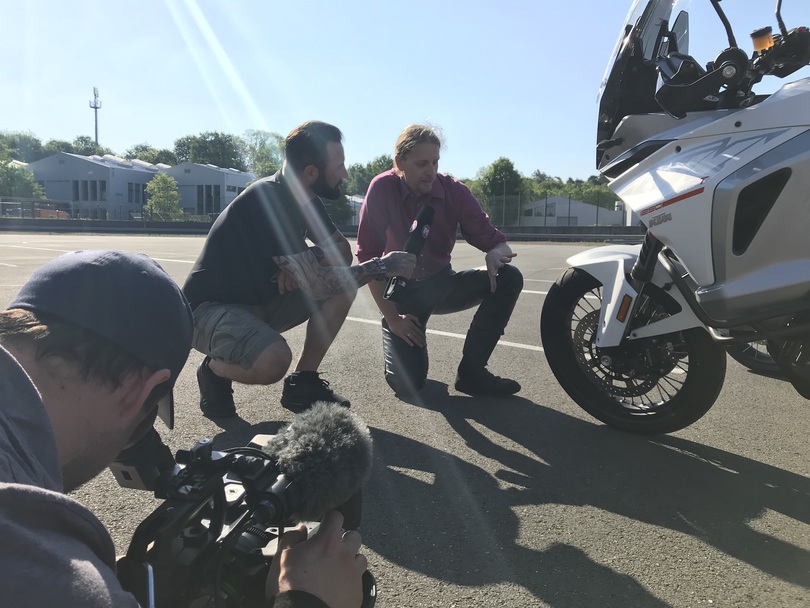
By addressing the right target group on social media such as Instagram, Youtube and Facebook, the Motorcycle Industry Association (Industrieverband Motorrad, IVM), with the support of the Federal Ministry of Transport, is reaching out to motorcyclists and drivers of motor scooters. Based on the viewing and usage habits of motorized two-wheeler riders, not only are safety-related topics covered, but there is also a lively exchange with the ‘community’. We are therefore talking with the target group instead of about them.
The collaboration with the 'Motorcycling? Sure, but stay safe' VivaLaMoped online magazine is very successful. This page has even more fans than well-known motorcycle magazines. Content on safe driving and vehicle safety is illustrated by means of GIFS (moving graphics), internet memes (internet in-jokes) or cinemagraphs (still photographs in which a movement repeats itself). The range of offers is completed by short films and expert discussions – often in line with the season. More information on the 'Motorcycling? Sure, but stay safe' VivaLaMoped online magazine can be found here (German only).
“Scooting without risks” - the first nationwide campaign on e-scooters

Source: German Road Safety Council (Deutscher Verkehrssicherheitsrat e.V.)
With its motto 'Scooting without risks', the DVR, with support of the Federal Ministry of Transport, is raising awareness of the dangers of rule infringements when riding an e-scooter. The most important rules can be seen, among other things, on stickers and signs on the handlebars of the vehicles of rental companies, which are directly in the driver’s field of vision. Thecampaign mainly addresses the primary causes of accidents and misconduct by e-scooter riders, such as riding under the influence of alcohol, using footpaths, and riding double. Awareness is also raised about parking in line with the rules without obstructing others, in order to increase the safety of pedestrians.
The prevention campaign is aimed at young e-scooter riders, as statistics show that they are particularly prone to accidents involving e-scooters. The campaign focuses on users of shared vehicles.